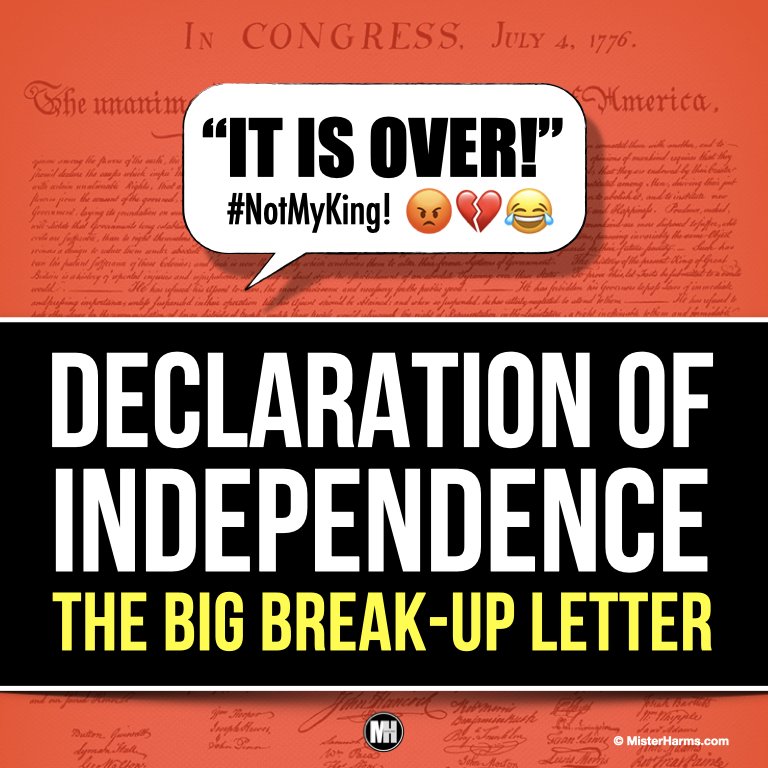
The Declaration of Independence Break Up Letter Activity
Quick Summary: The most effective way to teach the Declaration of Independence to elementary, middle, and high school students is by framing it as a "break up letter." By using a relatable relationship "hook," teachers can decode the List of Grievances and Social Contract in a way that sticks, transforming a 1776 primary source into a modern, interactive classroom experience.
The Declaration of Independence: Teaching the Ultimate Break Up Letter
Early United States history is one of my favorite eras of history to teach. There’s just something intriguing about a relatively small group of citizens that had a vision to take on the world power of its day
But let’s be honest: just because I love history doesn’t mean my students do. After decades in the classroom, I’ve learned one big truth: Teaching the WHAT is just delivering information, but examining the WHY and HOW leads to transformation.
With these important questions in mind, I like to ask myself, "How do I explain the Declaration of Independence to middle schoolers (or even 5th graders) so they actually care?" The answer is shared experiences. And what is more "universal" to a student than the drama of a break-up?
Why This Lesson Matters in Today’s Classroom
Why study the Declaration of Independence in 4th-12th grade? Because it’s the birth certificate of the most influential nation in modern history. But to a 4th grader or a highschooler, it can feel like a dusty relic.
By framing this as a "break up," we show students that the American Colonists weren't just writing a letter; they were ending a "toxic relationship" with King George III to protect their Natural Rights as seen in the original Declaration of Independence.
Before we ever touch the Revolution, I usually begin all of my history courses with my Why Study History lesson to help them see the "big picture." and why we study history in the first place.
What’s Included: Everything You Need to Hook 'Em
I’ve polished this resource over two decades so you can just "print and go." It works for upper elementary (focusing on the "why") all the way to high school (focusing on the "analysis").
The Hook + "Secret" Letter: A scripted, dramatic note from A.C. to K.G. that you can read in your most dramatic voice!
Texting Activity: A student favorite! Students “text” their grievances to King George in digital-age slang.
Expert Teacher Guide: My personal tips and step-by-step instructions for successful implementation. It’s a hit every year!
Bonus Enhancements: Explore more into additional embelishments to add to this epic lesson
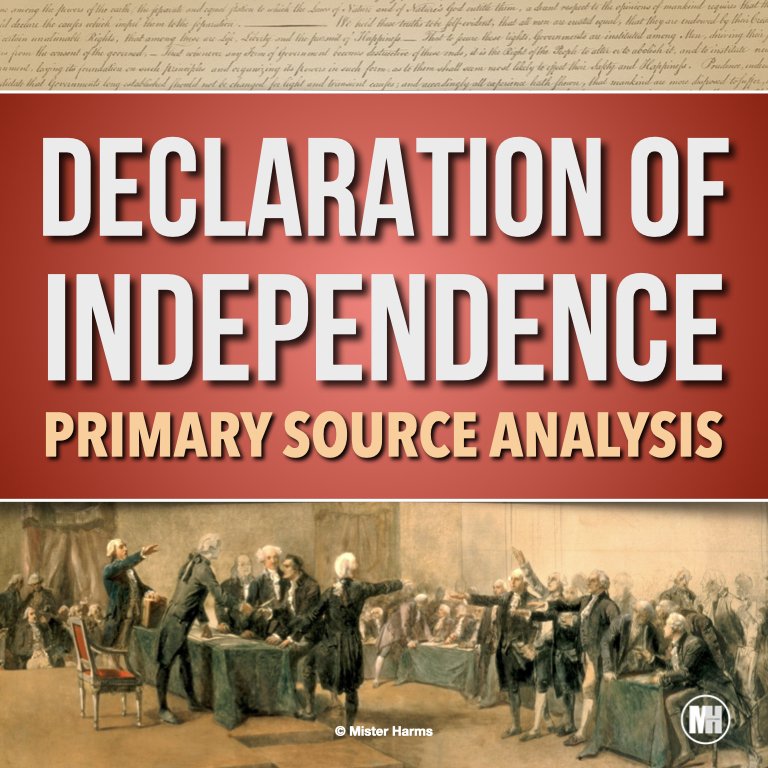
Primary Source Analysis: Links to an even deeper dive with options such as Declaration of Independence: Primary Source Analysis
“Best lesson all year! The kids were squealing for me to read the ‘break-up’ note I found, and their texts to King George were priceless! I look forward to using this lesson for YEARS to come! ”
Implementation: How I Teach This in My Classroom
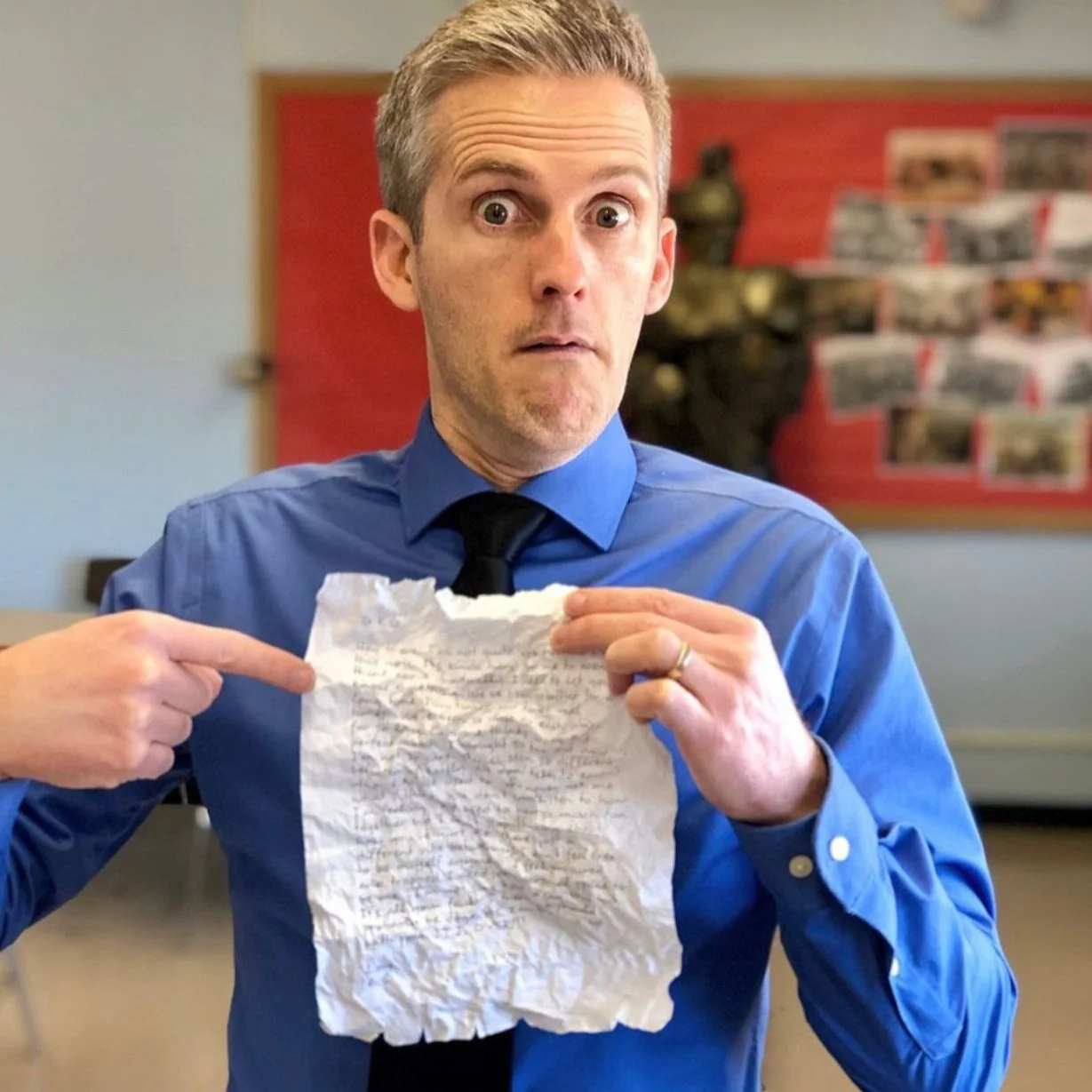
The Trash Trick: I start class by acting a bit annoyed. I tell the kids I’ve been finding litter in my room. "I found this piece of trash this morning," I say, holding up a crumpled paper. "But it's actually a love letter."
The Hook: The room goes silent. They are zoned in. I "reluctantly" read the letter to "K.G." about how "we've been together a long time... but we need to talk."
The Reveal: After they've spent ten minutes guessing which students in the school wrote it, I drop the bomb: "It's from the American Colonists to King George III." The moans of disappointment are priceless! 😂
The Work: Now that I've got them, we dive into the Foundational Document. We read the actual Declaration and realize it’s the exact same sentiment—just with 18th-century vocabulary. Then we curate our own break up letters but by texting! The simple and no-prep worksheets are included!
Here’s the deep dive to help you succeed! ⤵️
The day that we start learning about the Declaration of Independence, I begin the lesson by letting students know that I am a bit disappointed because I have been finding a lot of trash, litter, and garbage around the room.
I proceed to explain, “This morning I found a very interesting piece of trash. When I went to open it up, I realized that this was no ordinary piece of garbage, but rather an entertaining piece of literature. It seems to me like we have a love letter in our midst.”
Now I’ve got them, and the students are intrigued. With demands by students to read it, and playful denials by myself that I probably shouldn’t, I finally give in!
If you haven’t figured it out by now, this letter was planted by me, the teacher, prior to class. The crumpled piece of notebook paper is my hook. The students are zoned in, and I’ve got them on the edge of their seats. I proceed to read the letter which was written to K.G. and it was from A.C.
To K.G.
“Hey there! I’m not quite sure how to start this note, but we really need to talk! It’s kinda hard for me to even think about it actually. We’ve been together for a long time. Fun times. Sad times. Real times. We’ve been so close, and everyone thinks we’re the perfect match….”
The letter continues with detailed relationship issues, dramatic pauses by me, reasons why I shouldn’t be reading this private letter, and demands from the students that I must continue. As the students are all-in, they begin to hear that this love letter turns into a juicy, break-up letter. It’s so good! They’re trying to figure out who in their school would have written this. They’re dying to know as students continue listening in on one of the best break-up letters of all times.
When I’ve finished reading the entire break-up letter, and students have enthusiastically guessed who it could be, I finally give in and reveal that I think I know who it is. It was written to K.G. (King George) and it was from A.C. (American Colonists). The students are so disappointed and the moans start setting in. They were hoping for so much more! 😂 Though the letdown is a bit of a surprise to them, the students are now ALL-IN on learning about one of the biggest break-up letters in all of history!
After the dramatic introduction, our class begins the process of learning about the details within the original “break-up” letter called the Declaration of Independence. We read through the introduction, discuss the grievances, and reflect on the ultimate goal. I even give students a chance to write their own break-up letters with a few text messaging prompts to get them going.
⭐️ This is definitely a student favorite, and they talk about it for years to come!
🇺🇸 As featured on the TeachersPayTeachers Facebook page as well as We Are Teachers Instagram!
“Oh my goodness! The drama with this resource. My students where loving it! Trying to figure out which student this was about only to find out it was the start of a history lesson!”

Frequently Asked Questions: Declaration of Independence Break Up Letter
-
Focus on the "Grievances." Kids at that age have a very strong sense of what is "fair" and "unfair." When they see that the King was "breaking the rules" of the relationship, they connect with the colonists immediately.
-
Not at all. I’ve used this with seniors! While the hook is fun, the follow-up Primary Source Analysis is rigorous. It’s a perfect "palette cleanser" for a heavy government unit.
-
You can do the "Hook", the basic letter summary, and texting activity in one 45-minute period, or stretch it into a two-day deep dive with the texting activity and primary source analysis.
-
For teaching purposes, we focus on the Preamble (the 'why'), the Declaration of Natural Rights (the 'philosophy'), the List of Grievances (the 'break-up reasons'), and the Resolution of Independence (the 'official goodbye').
Final Thoughts
Try this Declaration of Independence Breakup Letter lesson in your classroom today! I would highly recommend it! This resource includes a full set of teacher instructions, the full break-up letter, a texting assignment, link to a video, and even more.
You may also be interested in a more in-depth resource entitled Declaration of Independence Activity: A Primary Source Analysis. This lesson gives students the chance to dive even deeper into the document and analyze the main ideas by exploring the full primary source. I absolutely love both of these lessons, and I know you will too.
How about you? Have you used these lesson ideas in your classroom? What other creative ideas do you like to incorporate as you learn about the Declaration of Independence? Drop your advice in the comments below or contact me! I’d love to hear from you!
If you’d like to receive more classroom ideas and thoughts from Mister Harms, join my classroom for email updates. I’ll even throw in a free resource for you!
More AMerican History Lessons



EXPLORE SOCIAL STUDIES EXPERIENCES