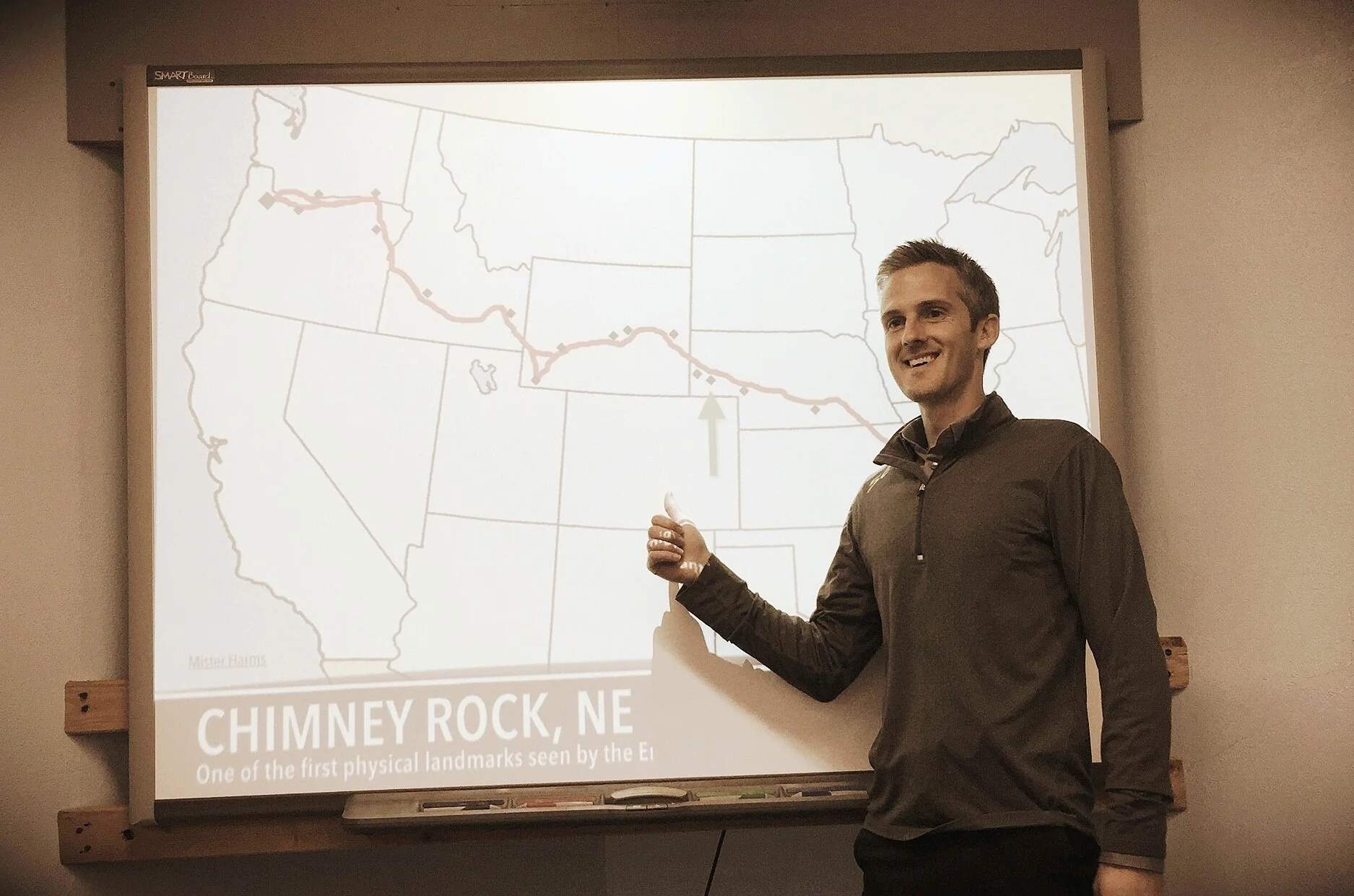
10 Engaging Oregon Trail Lesson Plans & Simulation Games
Quick Summary: Looking for engaging Oregon Trail activities and lessons? The best approach combines digital classroom simulations, like the classic Oregon Trail game, with hands-on projects such as interactive mapping, pioneer journaling, and historical time capsules. These activities help upper elementary and middle school students experience Westward Expansion firsthand, boosting critical thinking and historical empathy.
Are you a history teacher or homeschool educator on a quest to make the past truly come alive for your students? It is one thing to read about pioneers in a textbook; it is entirely different to have students experience the rugged terrain, difficult choices, and triumphs of the westward journey. When students are actively engaged in decision-making, they naturally begin to understand why we study history in the first place. Dive into the captivating saga of this historical trail with these ten creative, hands-on activities tailored specifically for upper elementary and middle school classrooms.
The Value: Why Teaching the Oregon Trail Matters Today
Teaching the Oregon Trail matters because it provides a practical framework for students to practice critical thinking, resource management, and historical empathy. By stepping into the shoes of 1840s pioneers, students move beyond memorizing dates to understanding the human element of Manifest Destiny.
According to research highlighted by the American Psychological Association, integrating game-based learning and simulations into the classroom can increase student retention of academic content by over 12% while significantly boosting active engagement. When students participate in a dynamic Oregon Trail simulation game, they are weighing risks, analyzing consequences, and collaborating in real-time. This interactive approach bridges the gap between traditional textbook learning and the dynamic, fast-paced world our modern students live in.
Table of Contents
10 Hands-On Oregon Trail Project Ideas, Lessons, & Activities for Middle School
These ten instructional strategies are designed to hit multiple learning styles, from visual and kinesthetic to analytical and creative. Enjoy the trail while making history fun!
1. Oregon Trail Classroom Game Simulation: A Virtual Voyage
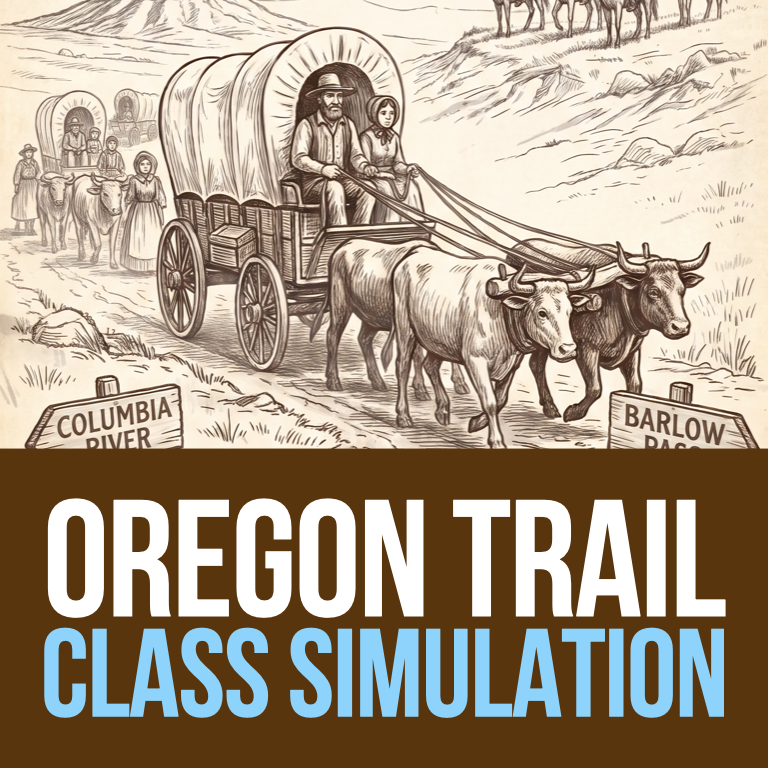
Engage your 4th to 8th grade students with this immersive Oregon Trail simulation game and interactive history unit. If you are looking for high-engagement Oregon Trail activities or a comprehensive Westward Expansion simulation, this experiential learning project seamlessly blends historical learning with creative student journaling, allowing your classes to experience pioneer life firsthand!
Enjoy taking your middle school and upper elementary students on an adventure of a lifetime known as the Oregon Trail! Students will form family wagon teams, manage provisions, and race each other to the Oregon Territory. While learning about this pivotal era in United States history, this guided simulation will allow students to actively live out the pioneer experience. It is a fantastic anchor resource for any early American History class!
📦 What's Included inside the Simulation Pack?
🗺️ Full Lesson Implementation Blueprint: Complete teacher and student instructions accompanied by all necessary handouts to orchestrate a zero-prep classroom simulation game.
📈 Interactive Budgeting & Log Forms: Includes print-ready and digital forms for general store shopping, supply pricing, trail stop logs, food consumption trackers, financial ledgers, and a wagon party calendar to monitor daily progress.
💻 150+ Slide Visual Presentation: A comprehensive multimedia slideshow containing over 150 slides packed with real historical photos, deep-dive informational texts, and quick-reads to guide your class through every landmark.
⚙️ Universal Slide Compatibility: Access the presentation as a fully editable Google Slides slideshow or as a traditional Microsoft PowerPoint file.
🎲 Digital Dice Mechanics: Direct access to interactive web-based dice for students to roll and dynamically calculate their randomized traveling fates, survival outcomes, and trail hazards.
📜 Primary Source Text Archives: A curated treasure trove of authentic emigrant quotes, journals, historical maps, and structural visual summaries to teach historical perspectives accurately.
🎨 Bonus Artistic Elements: Includes two free pioneer-themed coloring book pages for early finishers or unit extensions.
🛠️ How to Implement This in Your Classroom:
This multi-day simulation is completely flexible and can be customized to fit your schedule.
Form Wagon Parties: Students divide into teams, pick historic occupations, and budget their starting cash for frontier supplies.
Hit the Trail: Advance through landmark stops using the visual presentation while students roll interactive dice to see if they encounter river crossings, broken wagon axles, or safe passage.
Reflect via Journaling: Students write in-character diary entries based on the real historical quotes and daily hardships faced by their wagon team.
⭐️ Download a sample preview to learn more!
⭐️ Save 20% by getting the Westward Expansion Bundle!
What Teachers Are Saying
"This activity was so much fun and very organized. The students learned a lot.” - Margaret ★★★★★
“LOVE, LOVE, LOVE it! This product is fantastic! All of the research and labor is done for you...Overall, well worth the money!!!" - 422 History ★★★★★
“This is a great resource that my students love! …an interactive lesson where students learn a wide variety of information about the Oregon Trail.” - ELISE ★★★★★
⭐️ Read more about this amazing activity on my blog!
⭐️ Also available on Teachers Pay Teachers!
🎨 Add some fun with this Oregon Trail Coloring Book!
⭐️ Enjoy some Oregon Trail Merch and Swag while you travel the trail!
Thank You!
Thanks so much for stopping by. It's great to meet you! I hope this resource adds value to your classroom. I would also love to see how you've incorporated this product into your classroom. Feel free to post a photo of this resource in action and tag @misterharms so I can meet you!
Want More?
Simulated activities offer an authentic experience, enabling students to make critical decisions and manage resources. Instead of just reading about the trail, I created The Oregon Trail Game by Mister Harms so my students could actively navigate the journey. This digital landscape forces students to problem-solve, making the history of pioneers heading west completely immersive.
Step 1: Form Wagon Parties: Divide your classroom into small groups. Have them choose pioneer roles, determine their family relationships, and allocate their initial starting funds for supplies.
Step 2: Map the Route: Provide each student with a blank trail map. As you progress through the lessons, have them mark major forts, river crossings, and landmarks.
Step 3: Play the Simulation: Dedicate 15-20 minutes of class time to run an Oregon Trail simulation game. Allow students to face randomized daily challenges like broken wagon axles or severe weather.
Step 4: Daily Journaling: After the simulation, require students to write a short, in-character diary entry detailing the day's successes or tragedies.
Step 5: Enhance with Multimedia: Supplement the gameplay with the included multimedia Google Slides presentation by Mister Harms (over 140 stunning visuals, emmigrant quotes, maps, and more).
2. Game-Based Learning: Classic Educational Video & Card Games
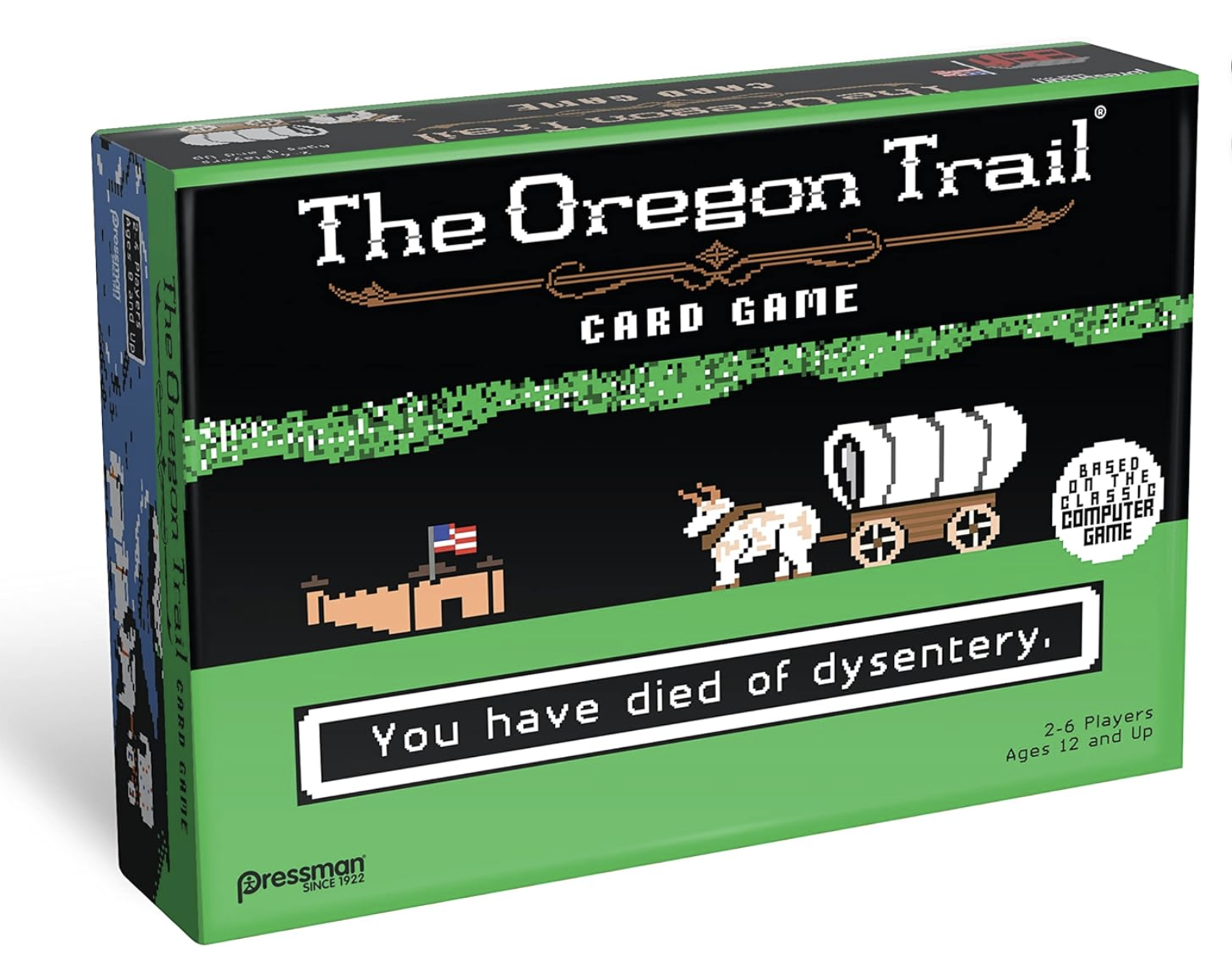
Educational games reinforce critical thinking and decision-making skills in a highly interactive environment. Introduce your students to the classic Oregon Trail game played on vintage Apple IIe computers. This gaming approach captures students' attention, reinforcing critical thinking and decision-making skills in a fun and interactive way.
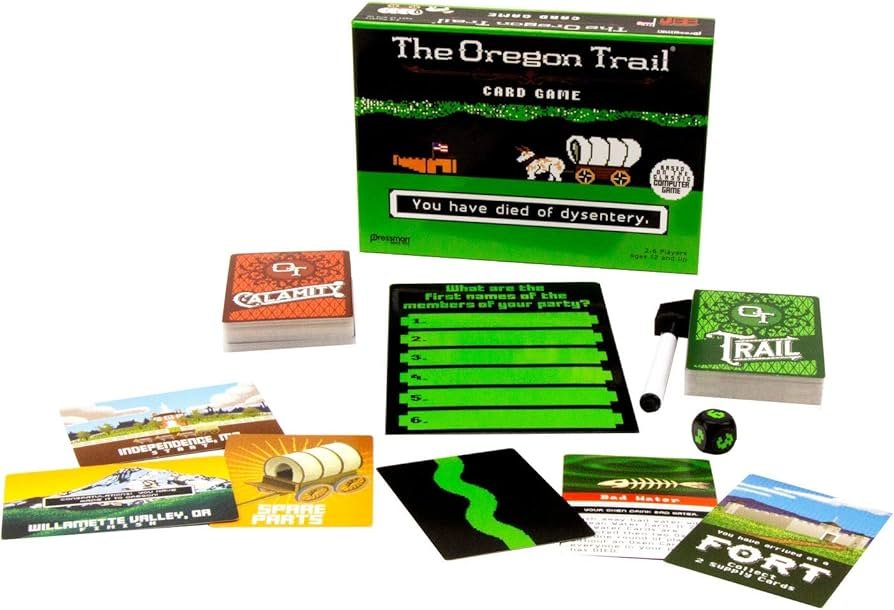
You may even want to try the Oregon Trail Card Game for students to play as part of a center rotation or a fun twist to fill the last 20 minutes of class. Working as a team to survive the journey from Independence, Missouri to the Willamette Valley is a challenging and memorable way to learn. My students have enjoyed playing this, and I even brought the card game home to play with my family. It’s so fun and very challenging to survive the trail…good luck!
3. Westward Expansion Map Activities: Crafting the Trail
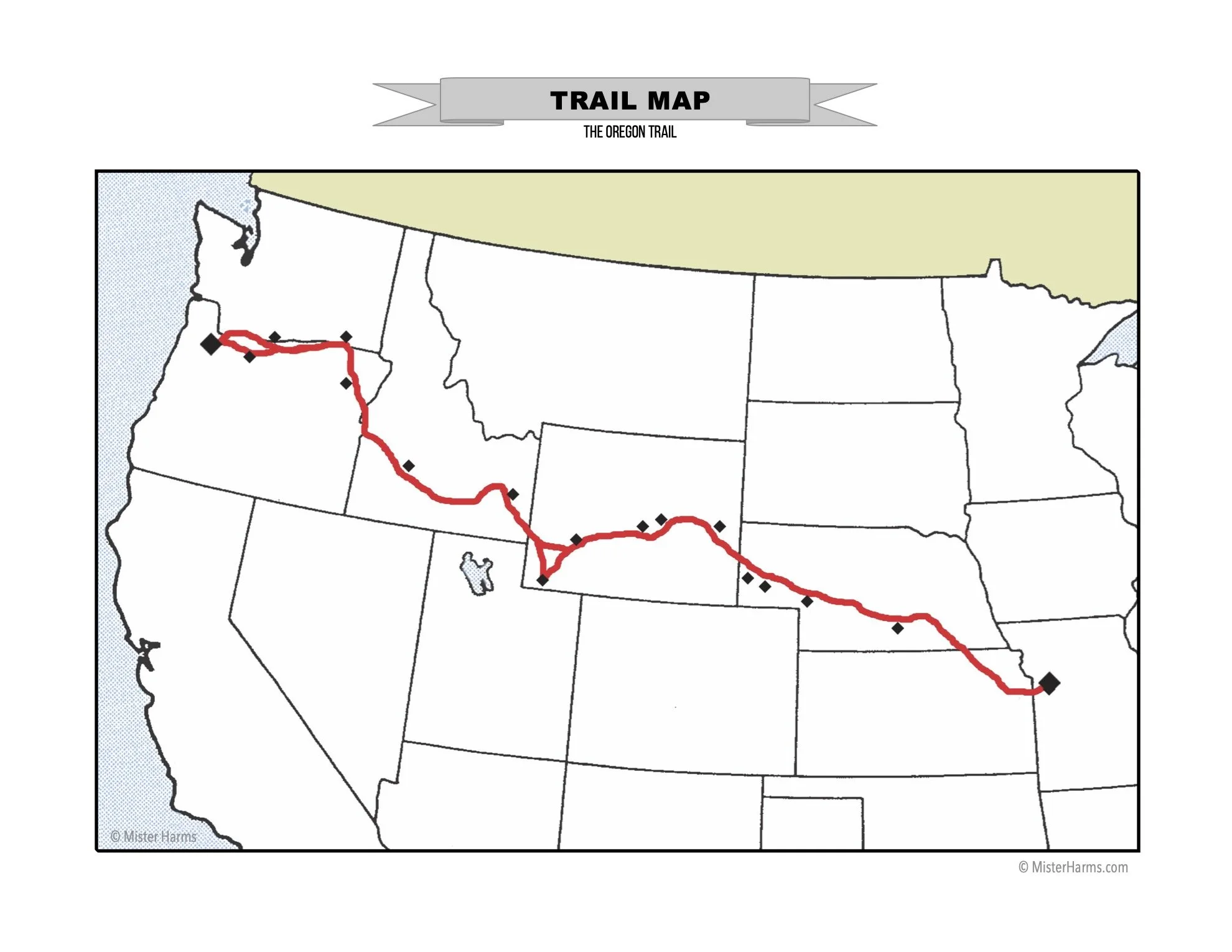
Mapping activities transform your classroom into a cartographer's workshop, enhancing geographical understanding. Using printable Oregon Trail Worksheets & Maps, students can document important stops, forts, and mileages along the way. Whether they create individual maps or a giant classroom poster, this hands-on project reinforces map-reading skills and terrain analysis.
You could have each student label their own map as they travel the trail, or create a large poster in the classroom to document the important sites as a group. This hands-on activity not only reinforces map-reading skills but also encourages critical thinking regarding the trail's terrain and landmarks. Download a sample Oregon Trail Map Worksheet.
⭐️ Join my classroom email list and get 10% off your next purchase!
4. Pioneer History Coloring Pages: Artistic Expression
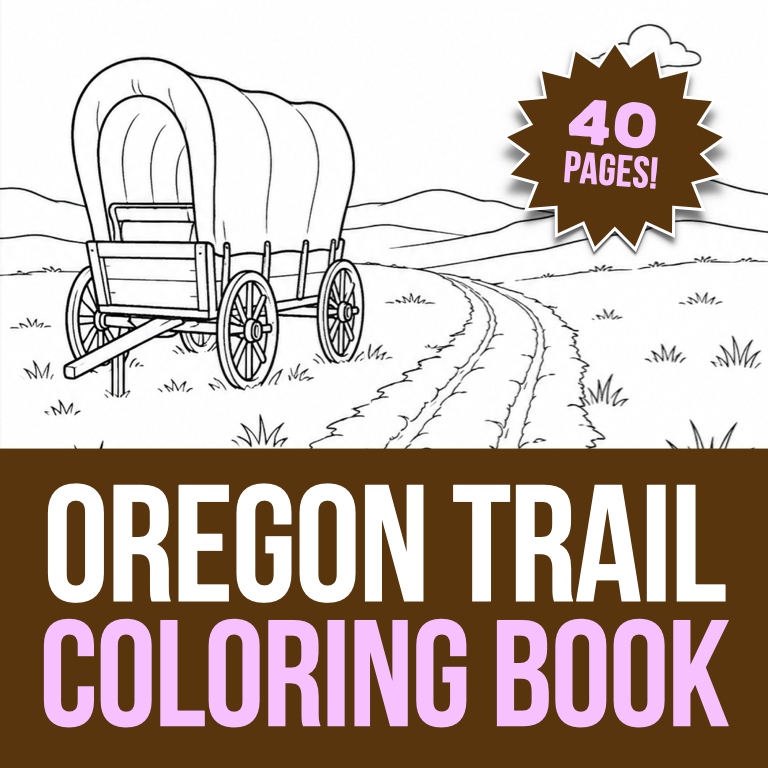
Bring the history of the Oregon Trail to life with this 40-page printable coloring book! Perfect for elementary or middle school students, this resource is designed to engage young learners while reinforcing key concepts about westward expansion, pioneer life, and U.S. history.
What’s Included In These Oregon Trail Coloring Pages?
✅ 40 unique black-and-white coloring pages featuring covered wagons, pioneer families, oxen, trading posts, river crossings, and more!
✅ High-quality PDF download – print as many copies as needed for your classroom or homeschool.
✅ Great for U.S. history lessons, early finishers, and social studies centers!
⭐️ Save by getting the Westward Expansion Bundle!
⭐️ Use alongside my Oregon Trail Simulation Game!
⭐️ Get the Oregon Trail Readers Theater Classroom Play!
How to Use:
✔️ Supplement your Oregon Trail or westward expansion unit
✔️ Engage students in history through interactive coloring activities
✔️ Perfect for early finishers, sub plans, and homeschool curriculum
✔️ Hang up your student masterpieces and decorate your room
Print, Color, Learn! This Oregon Trail coloring book is an easy, no-prep way to bring history into your classroom while keeping students engaged.
Download a sample preview to learn more!
⭐️ Learn more on my Oregon Trail Activities blog!
⭐️ Also available on Teachers Pay Teachers
⭐️ Enjoy Oregon Trail Merch and Swag on the traail!
Thank You!
Thanks so much for stopping by. It's great to meet you! I hope this resource adds value to your classroom. I would also love to see how you've incorporated this product into your classroom. Feel free to post a photo of this resource in action and tag @misterharms so I can meet you!
Want More?
Coloring pages are a fantastic, no-prep way to engage fast finishers or supplement a homeschool curriculum. An Oregon Trail Coloring Book depicting historical scenes allows students to unleash their creativity. Once completed, these colorful masterpieces double as fantastic classroom decor!
These coloring pages are perfect for fast finishers, sub plans, or to use for your homeschool curriculum. Once students are done, hang up their colorful masterpiece and decorate your classroom. Print, Color, Learn! This Oregon Trail coloring book is an easy, no-prep way to bring history into your classroom while keeping students engaged.
5. Historical Journey Journals: Creative Writing Prompts
Maintaining a personal narrative journal connects students to the human side of this historic migration. By collaborating with their wagon teams, students create specific characters, ages, and relationships. Guided by Oregon Trail learning materials, they document daily challenges and emotions from differing perspectives, drastically improving historical empathy.
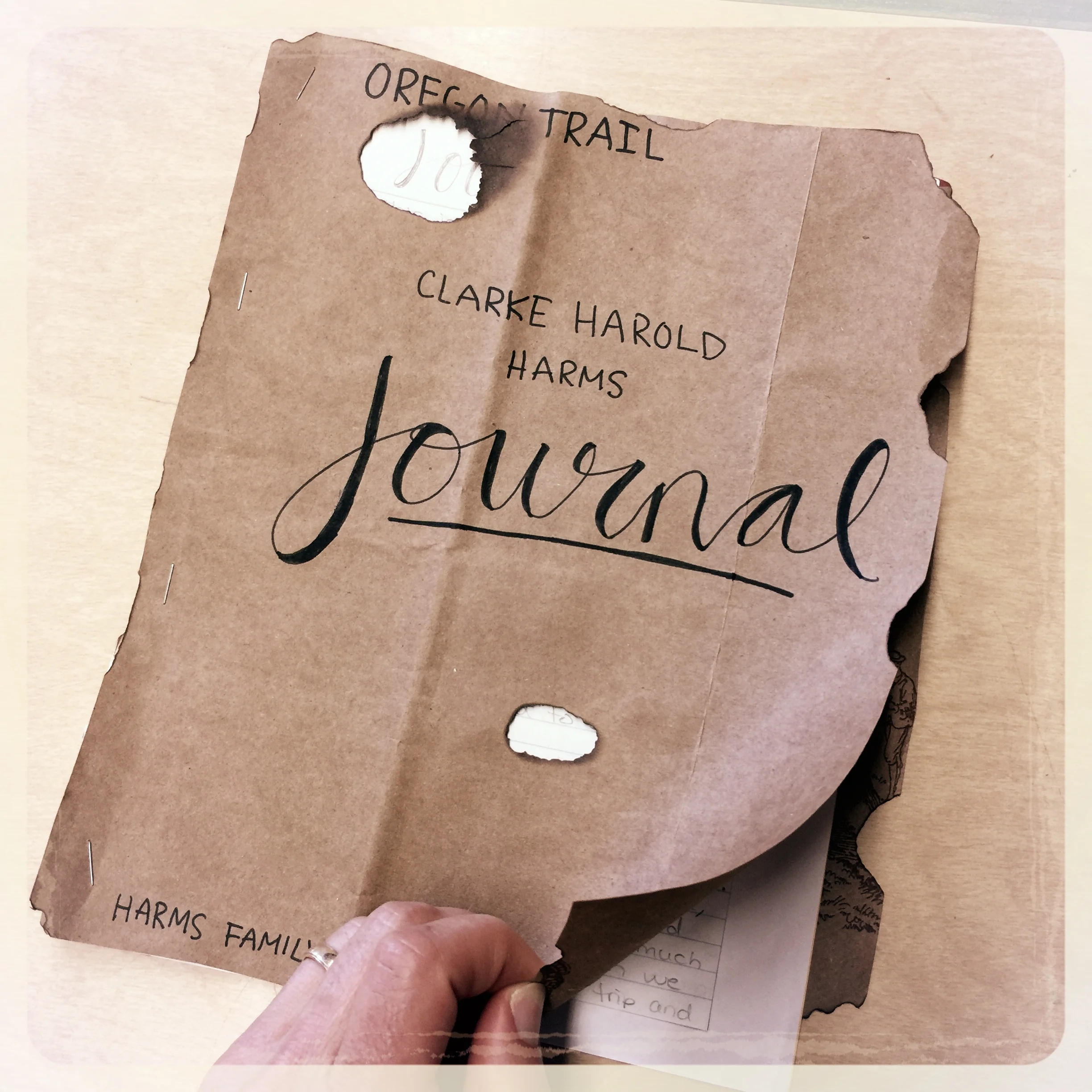
Learn more about this Oregon Trail Journaling Activity

6. Interactive History Projects: Magazines & Storyboards

Your students will love becoming journalists with these fantastic creative writing templates designed to look like magazines and newspapers! Fully editable, and completely customizable, students will get to summarize any content matter all through the creative ease of Google Drive!
Keep your students engaged while creating content-rich material with these visually stunning and academically challenging journalism templates! These templates are perfect for distance learning, a trip to the lab, 1:1 schools, sub plans, any subject matter, and any grade level! I know you'll love them and your students will too! Once you've downloaded this product, check back later as this will be a growing bundle with even more templates to come!!
What's Included:
Fully editable and customizable Magazine Covers
Magazine pages that can be used in addition to or separately from the covers!
A Newspaper Template for that newsies flair!
A Brochure Template for a quick flyer or insert!
Teacher and student directions to help you get going!
More to come!! This is a growing bundle so check back later and keep an eye on your notifications for template updates!
Ideas For Use:
Historical Projects
Biographies
Book Reports
Research Projects
Economics Briefings
Science Findings
All Creative Writing
ELA, Science, Math, History, Agriculture, Business, Psychology, etc..
Perfect for creatively summarizing any content for any subject!
⭐️ Save 25% on this resource & more by getting the Emergency Activities Bundle!
What Teachers Are Saying:
"This was seriously the best. We did research on the Titanic and students created magazines and articles based on the Titanic. Students shared their final projects at conferences and parents LOVED them! - Kristi ★★★★★
"These templates are amazing! They made illustrating concepts so easy. You get a professional-looking product and kids are proud to make the magazine covers." - Dianne ★★★★★
"Awesome project, it is perfect for a different way to showcase knowledge. I am already thinking of several ways I can use it next school year as well. Thank you!” - Sarah ★★★★★
Thank You!
Thanks so much for stopping by. It's great to meet you! I hope this resource adds value to your classroom. I would also love to see how you've incorporated this product into your classroom. Feel free to post a photo of this resource in action and tag @misterharms so I can meet you!
Want More?
Interactive learning modules cater to diverse learning styles by allowing students to summarize historical content in their own voice.
Summarize the main ideas of the trail in a magazine or newspaper project that can hit the newsstands of the 1840s. Create a history storyboard or a TikTok video summary for your students to present to the class. Whatever expression works best for your classroom, incorporating a variety of creative avenues for students to explore the Oregon Trail in a multi-dimensional way is fun and effective.
Oregon Trail simulation game, pioneer journal prompts, mapping activities, and more! Perfect for making the Oregon Trail come alive!
“Love, love, love it! This product is fantastic! All of the research and labor is done for you! Overall, well worth the money!”
7. America The Story of Us Viewing Guides: Visual History

America The Story of Us, by the History Channel, is one of the best video series to show for any American or US History class. Teachers love the quality content, and students enjoy the engaging visuals! Certainly considered a classic by now, this series has 12 episodes ranging from the early setters of Jamestown, all the way through September 11th and the new millennium.
⭐️ Download a preview to see more!
⭐️ Save by getting the Westward Expansion Bundle!
This America The Story of Us "Westward" worksheet and viewing guide includes the following:
Trailblazing pioneers head west on the Oregon Trail and Mormon Trail
Frontier adventurers like Daniel Boone explore the Appalachians
Lewis and Clark expedition and the exploration of the Louisiana Purchase
Sacajawea helps Lewis and Clark
California gold rush
The steamboat creates a new wave of industry and transportation
Mountain men like Jedediah Smith blaze trails through the Rocky Mountains
The Alamo, Texas, and Davy Crockett
The Cherokee and the Trail of Tears
⭐️ Get the entire bundle with all 12 episodes!
What's Included:
All questions for this product are for the viewing of Episode 3 • Westward
There are over 20 thoughtful questions that are presented in the order of the video.
All questions are completely editable if you prefer to alter any questions.
Questions are separated into labeled, time-stamped viewing segments for students to easily follow along.
Each worksheet also ends with one thought provoking question to stimulate classroom discussion.
Answer keys are included for all questions.
Worksheets are available in a Google Classroom format for students to complete on any device.
These worksheets can also be easily exported as a stunning PDF for students to complete as a double sided worksheet. (Whether you have a student that needs special assistance, or you prefer your class to have a paper format, this printable PDF option is extremely helpful for any classroom.)
Whichever format you prefer, both printed and digital options will look and feel the same for easy grading by you the teacher.
“My students LOVE "America: The Story of Us" and I love that these video guides keep them listening and on their toes. Questions were easily identified in the video, which made it easy for me to pause while my students wrote their answers.” - Melissa ★★★★★
“This is so organized and helpful to use with the episodes of America, the Story of Us. I like that you added the times for the sections.” - Kimberly ★★★★★
“These videos are so engaging. The students begged to watch these. The fact that the questions were provided to assess their engagement and understanding was such a time saver for me and also so valuable for their learning. This is an incredibly helpful resource. Videos and questions enhanced student engagement and learning.” - Dorothy ★★★★★
⭐️ You may also like the America Emoji Game!
Thank You!
Thanks so much for stopping by. It's great to meet you! I hope this resource adds value to your classroom. I would also love to see how you've incorporated this product into your classroom. Feel free to post a photo of this resource in action and tag @misterharms so I can meet you!
Want More?
Captivating documentaries reinforce major historical facts while keeping visual learners entirely engaged. Episode 3 of the History Channel’s America The Story of Us does a fantastic job highlighting Westward Expansion.
Using structured viewing guide worksheets ensures students stay focused and capture the most important details as they watch these cinematic America The Story of Us episodes.
If you would like to have an assignment to go along with the video, America the Story of Us Viewing Guide Worksheets will help students stay focused as they watch the movie.
You can watch the entire video or individual portions that include Early Appalachian Frontier, Louisiana Purchase, Lewis & Clark Expedition, Trails out West, Texas Independence, The Alamo, and the California Gold Rush.
⭐️ Learn more about All 12 episodes in my America The Story of US Video Series blog post
8. Oregon Trail Activity: Interactive Readers Theater Play Script
Looking for a fresh, creative avenue to bring Westward Expansion to life? Readers Theater is one of the most effective ways to break up traditional textbook reading and get students actively invested in the story of the trail.
Instead of passive listening, students take on real-life historical roles, bringing authentic pioneer journals to life right in the classroom. Perfect for various learning styles and kinestehtic learners.
Why Use a "Choose Your Own Adventure" Play Script?
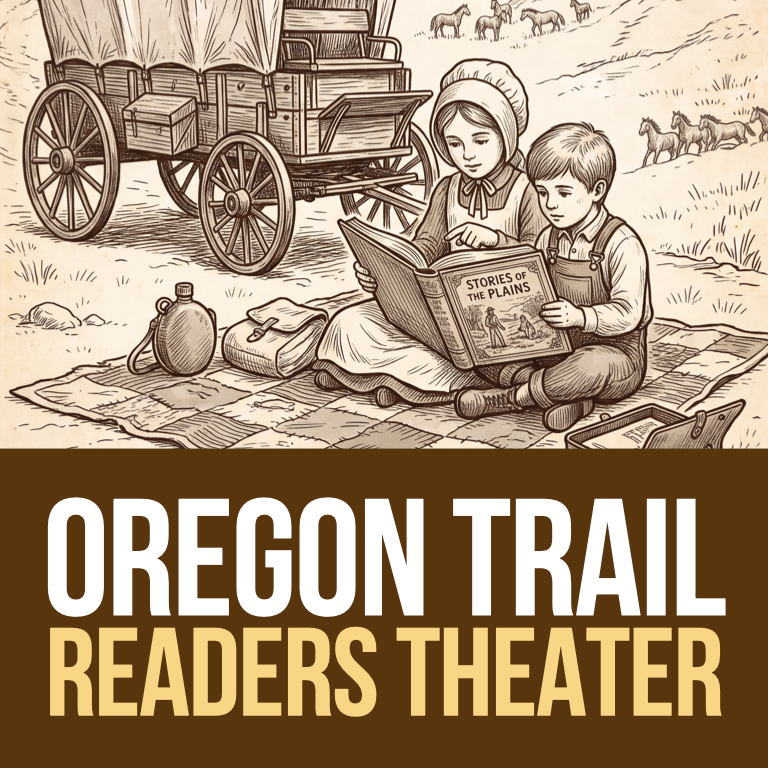
Bring Westward Expansion to Life: Choose Your Own Adventure Oregon Trail Simulation!
Are you tired of textbooks that leave your students disengaged during your Westward Expansion unit? Turn your classroom into a rugged wagon train with this interactive, Choose Your Own Adventure Readers Theater Play and Simulation!
Textbooks are static, but this activity forces students to walk in the boots of 1840s pioneers, facing the same impossible choices, thrilling moments, and brutal trials as the real emigrants.
"This isn't just a read-aloud script; it’s an immersive, informational text masked as a fun classroom game!" - Mister Harms
This no-prep, printable activity is perfect for upper elementary and middle school (grades 4-8). Students become the cast of characters, deciding the outcome of their own journey based entirely on verified historical research and actual emigrant journal entries.
⭐️ Save by getting the Westward Expansion Bundle
⭐️ Use alongside my Oregon Trail Simulation Game
⭐️ Download a sample preview to learn more
⭐️ Also Available on Teachers Pay Teachers
How It Works:
The script follows a fictional emigrant family, the Millers, from their "jumping off town" in Independence, Missouri, toward their new home in Oregon City. Along the way, the class must debate and vote on critical decisions:
Geography: Purchase supplies in Independence, cross the dangerous Platte River, and pass landmarks like Chimney Rock and South Pass.
Survival: Encounter Native American traders, face typical trials like cholera, and make the ultimate choice at The Dalles, Oregon.
The Climax: Your Students Decide their Fate!
At the end of the main script, your class must vote:
Choice A: The Columbia River. Risk the massive whirlpools on a pine log raft?
Choice B: The Barlow Pass. Spend your last $5 on a toll road to risk starvation in the dense Mt. Hood forests?
Based on the vote, you flip to the corresponding Alternate Ending (included!) to discover if your wagon train successfully navigated their path... or paid the final price of the trail.
Perfect for Distance Learning & Classroom Differentiation:
This product is a flexible educational tool designed to fit any classroom:
Role Play: Features a cast of 15–20 people, perfect for whole-class engagement.
Informational Text: Strengthens reading comprehension, analysis of primary sources, and understanding of context.
Cross-Curricular: Covers Social Studies standard (Manifest Destiny, Manifest Destiny, Movement West) and ELA standards (reading fluency, perspective, and debate).
What’s Included in Your Download:
Full Readers Theater Script (Acts 1-5).
Class Voting Guide & Debate Prompt.
Alternate Ending A: The Columbia River (Risky and white-water based!).
Alternate Ending B: The Barlow Pass (Exhausting and land-based!).
A Student Diary Reflection Activity based on the characters' point of view.
⭐️ Learn more on my Oregon Trail Activities blog!
⭐️ Enjoy Oregon Trail Merch and Swag on the trail!
👉Perfect for curriculum requirements in: California (4th Grade History), Oregon (4th/5th Grade History), Washington State, Idaho, Missouri, and Nebraska state history units.
Thank You!
Thanks so much for stopping by. It's great to meet you! I hope this resource adds value to your classroom. I would also love to see how you've incorporated this product into your classroom. Feel free to post a photo of this resource in action and tag @misterharms so I can meet you!
Want More?
Differentiated Engagement: Gives students of all reading levels a voice—whether they take on a main character, read narrative sections, or participate in group class choices.
Primary Source Integration: Rooted in actual emigrant journals, giving students a realistic glimpse into the hardships, decisions, and daily life on the trail.
Built-in Critical Thinking: At pivotal moments in the journey, the script pauses for class debate. Should your wagon train brave the Columbia River or pay the toll for Barlow Pass? Students weigh the risks, vote on the path forward, and immediately experience the consequences of their decisions.
Flexible & Low Prep: Perfect as a multi-day unit capstone, a sub plan, or an interactive review activity that requires zero elaborate props or staging.
Featured Resource: Skip the prep and dive straight into the journey with the Oregon Trail "Choose Your Own Adventure" Readers Theater Play. It includes everything you need to transform your classroom into a decision-making wagon train!
Prefer a custom approach? You can also have students write their own short skits using primary sources, textbook chapters, or from information obtained from the National Historic Oregon Trail Interpretive Center.
⭐️ Join my classroom email list and get 10% off your next purchase!
9. Historical Time Capsule Activity: Preserving the Past
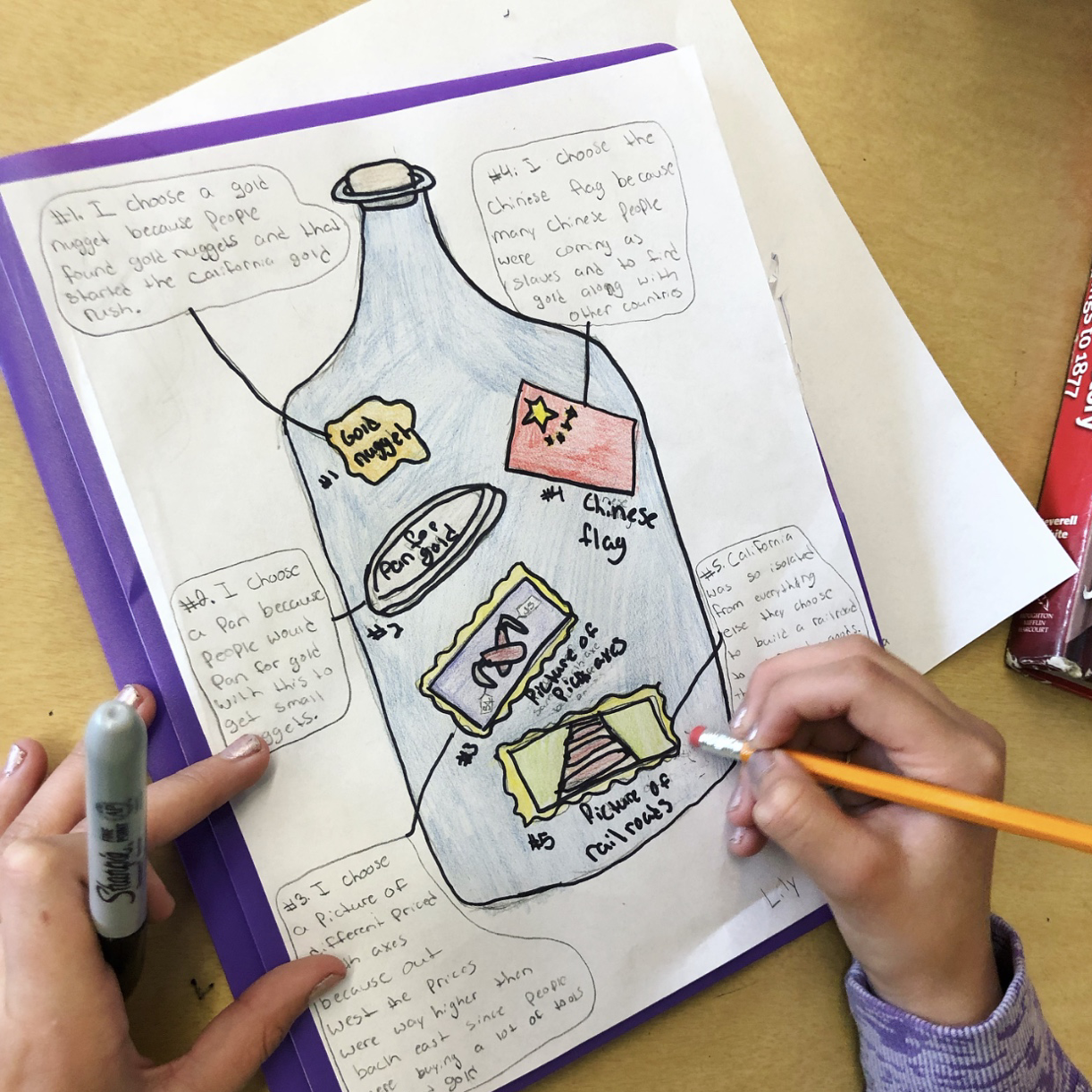
Much of what we know about history is due to preserved artifacts that are discovered. Create a moment-in-time by having students make time capsules from the 1840s. These capsules could be real containers with crafted artifacts made from wood, paper, clay, or anything artistic material available to your classroom.
Another option that requires less time is to create a visual time capsule through more of an artistic format. Direct students to think of 5 important items to put in their capsule that would historically represent life on the Oregon Trail. This can be done on a blank piece of paper or you can utilize the this history time capsule activity template for a more guided assignment. Included are worksheet printouts and a digital Google Docs format to complete online. Have fun putting artifacts into history!
10. Pioneer Day: Immersive Classroom Experience
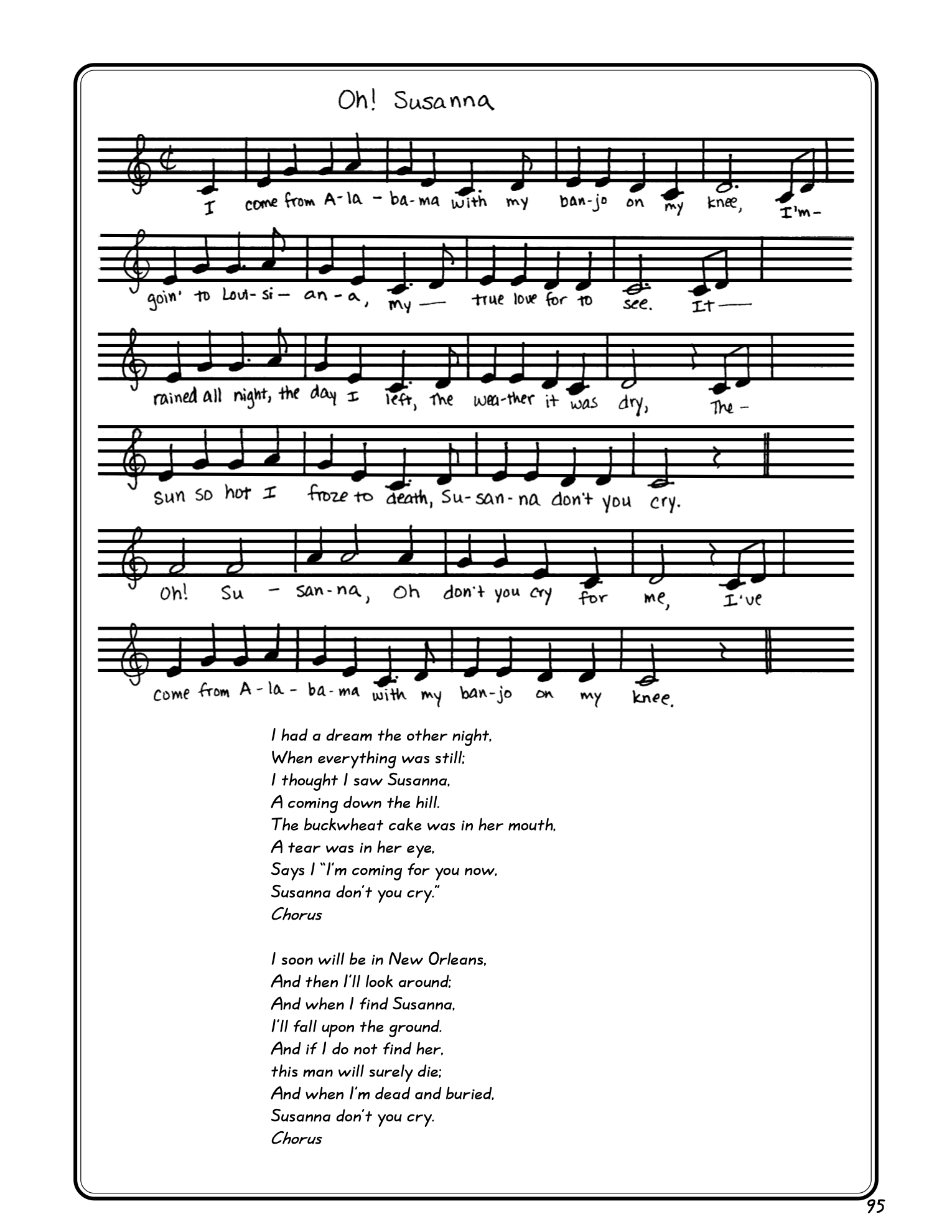
Transforming your room for a "Time Travel" day cements the unit's concepts into a core memory for your students. Dedicate a day to reliving daily life by cooking pioneer recipes, singing campfire songs, and dressing in western attire. It is the perfect culmination of your unit that celebrates everything they've learned.
The National Historic Oregon Trail Interpretive Center is an excellent resource for life on the trail such as Oregon Trail Campfire Songs and Oregon Trail Pioneer Cooking Recipes.
Frequently Asked Questions FOR Teaching THE Oregon TRAIL (FAQ)
How do I explain the challenges of the Oregon Trail to middle schoolers?
The best way to explain the challenges is through experiential learning. Instead of just listing hardships like disease, river crossings, and food shortages, have them experience these obstacles through an interactive classroom simulation or a structured journaling activity.
What are the most essential topics to cover during a Westward Expansion unit?
Essential topics include the concept of Manifest Destiny, the geography of the trail (starting in Independence, MO, and ending in the Willamette Valley), pioneer resource management, and the interactions with Native American tribes along the route.
Pin this list of Oregon Trail activities to save for your next Westward Expansion unit!
Ready to Hit the Trail?
Looking for a dynamic way to bring the American frontier to life for your students? Want to move away from dry textbook chapters and give your classes a hands-on, high-engagement look at pioneer life—without being locked into a rigid, day-by-day lesson tracker?
The Westward Expansion Activity Bundle delivers a flexible, premium collection of secondary history resources designed to slide seamlessly into your existing pacing guide. Anchored by the crowd-favorite, classroom-tested Oregon Trail Simulation, this toolkit gives middle and high school history teachers a robust set of experiential, visual, and analytical learning tools.
Whether you need a multi-day interactive experience, primary source tracking, or zero-prep substitute frameworks, this modular resource pack gives you the exact tools you need, right when you need them.
What’s Included in the Toolkit?
🎲 The Oregon Trail Classroom Simulation
The ultimate hook for your frontier unit. Put your students directly into the covered wagons as they make critical choices, manage vital supplies, and navigate the unpredictable dangers of the historic trail in a realistic, student-driven group simulation.
🎨 Oregon Trail History Coloring Book
A sleek, minimalist processing tool designed specifically for secondary students. This activity goes far beyond basic coloring, helping students visually cement key content knowledge regarding pioneer gear, geography, and daily frontier hardships.
🎭 Oregon Trail Readers Theater Classroom Play
Get your class reading historical content masked as a play! Students will love learning facts about the trail while reading in their best voices! Roles for every student make this a lesson to remember!
🎥 Lewis and Clark Video Discussion Guide
Keep eyes locked on the screen and brains turned on during video analysis. This structured framework is tailored to the iconic National Geographic/IMAX presentation to maximize historical comprehension.
📺 America: The Story of Us Video Guide (Episode 3: Westward)
A high-impact, chronological viewing guide that ensures students capture the massive scale, technical innovations, and deeply human stories of America's historic push to the Pacific.
📝 Plus Additional Bonus Resources
These are resources I use in my westward expansion unit that are simple and easy to incorporate. See the images to explore the full set of lesson resources included in this bundle.
⭐️ Also available on Teachers Pay Teachers!
The Mister Harms Advantage
Student-Centered Engagement: Shifts the classroom dynamic away from passive lectures and pushes students into active decision-making, critical thinking, and visual processing.
Complete Print & Digital Flexibility: Every resource features clean, print-ready layouts alongside 100% editable Google Slides and Google Docs links for seamless deployment via Google Classroom, Canvas, or hybrid learning spaces.
Sleek, Minimalist Aesthetic: Designed with a clean, professional layout that honors the maturity of middle and high school students—completely free of distracting, cluttered clip art.
Save Time and Budget
By purchasing these premium Westward Expansion activities together in this flexible unit toolkit, you receive instant bundle savings compared to purchasing each resource individually. Give your lesson library a massive upgrade while maximizing your classroom budget.
Thank You!
Thanks so much for stopping by. It's great to meet you! I hope this resource adds value to your classroom. I would also love to see how you've incorporated this product into your classroom. Feel free to post a photo of this resource in action and tag @misterharms so I can meet you!
Want More?
By weaving these creative lesson ideas into your upper elementary or middle school classroom, you are not just teaching history—you are guiding your students on a trailblazing journey through time. Transform your classroom into a hub of exploration and watch your students' passion for history ignite.
Ready to save yourself hours of prep time? Head over to the shop and grab the complete Oregon Trail Simulation Game & Resource Pack today, or get my complete Westward Expansion Bundle of Projects and Activities at a discounted price!
What Oregon Trail activities have worked well in your classroom? Drop a comment below, and don't forget to Pin this post for later so you have it ready for your next unit!