Teaching Scarcity: Creative Economics Lessons for the Classroom
Quick Summary: This guide provides middle and high school economics teachers with many high-engagement classroom activities designed to teach the fundamental concept of scarcity. From hands-on resource allocation simulations like the Cupcake Conundrum to digital tools like the Mister Harms Stock Market Game, these lessons help students visualize the conflict between unlimited wants and limited resources. Whether you are looking for a quick economics bell ringer or a comprehensive Shark Tank simulation, these strategies are designed to build critical thinking and financial literacy skills through interactive, classroom experiences.
1. The Cupcake Conundrum: Hands-On Resource Allocation Lesson
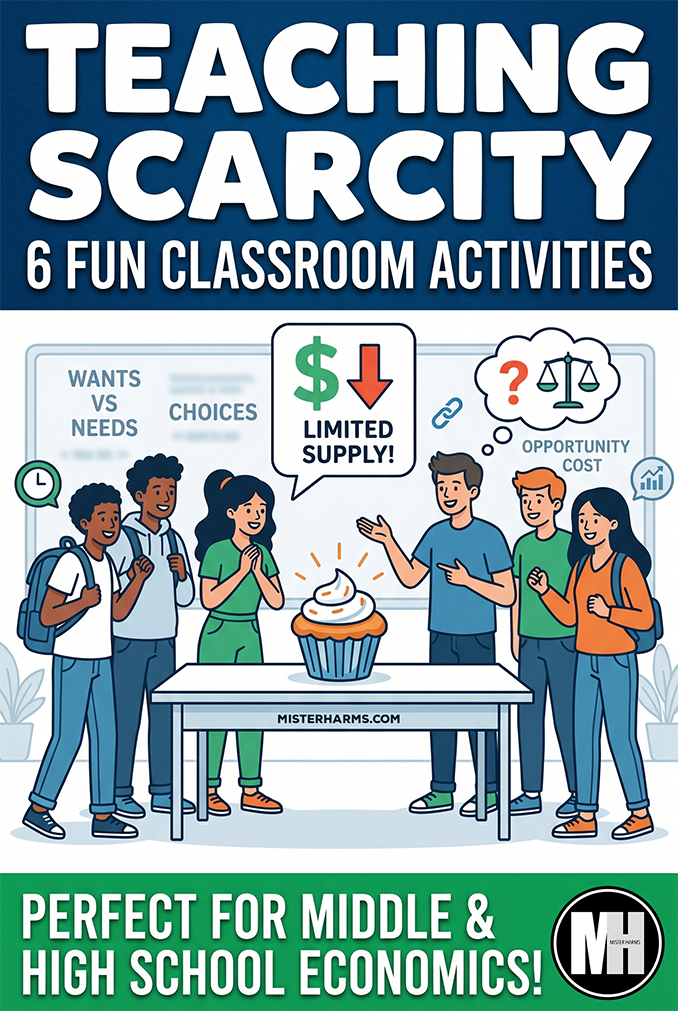
Transform the abstract concept of scarcity into a tangible (and delicious) experience with the 'Cupcake Conundrum.' Since scarcity is the fundamental economic problem that forces us to make choices, this is a classic Mister Harms approach: high engagement with a sweet reward!
The Setup: Divide your class in half. Group A are the Sellers (Supply) and Group B are the Buyers (Demand).
The Scarcity: Present only one cupcake (or a limited number) to the sellers.
The Activity: Allow buyers to pitch their "needs and wants" to the sellers. It’s amazing to watch students justify why they "need" that cupcake more than their peers!
The Discussion: After the "market" closes, prompt students with these questions:
Why does this cupcake have value? How did scarcity affect the price or the negotiation? What was the opportunity cost for the buyer who didn't get it?
Pro Tip: To keep the peace (and student morale high), I usually reveal a hidden "surplus" plate of cupcakes at the very end so everyone can indulge!
2. DIY scarcity Simulation: A Classroom Experiment Using paper chains
When teaching economics and the idea of scarcity, it can be hard to help students understand the concept while keeping them actively engaged. It is this very reason why I came up with the paper chain activity! I happened to be teaching on scarcity around the Christmas season, and I was trying to figure out a fun plan for the kids. As I was planning, I realized that my very own classroom was experiencing a scarcity in decorations! It was this personal scarcity that gave me the passion to create this resource. It has worked great every year since! Although I use this lesson for the Christmas season, you can certainly use this resource at any time of the year or for any upcoming holiday. Your kids can learn scarcity any day, and you can use decorations any time!
⭐️ Save 25% on this resource & others with my Economics Resources Bundle! ⭐️
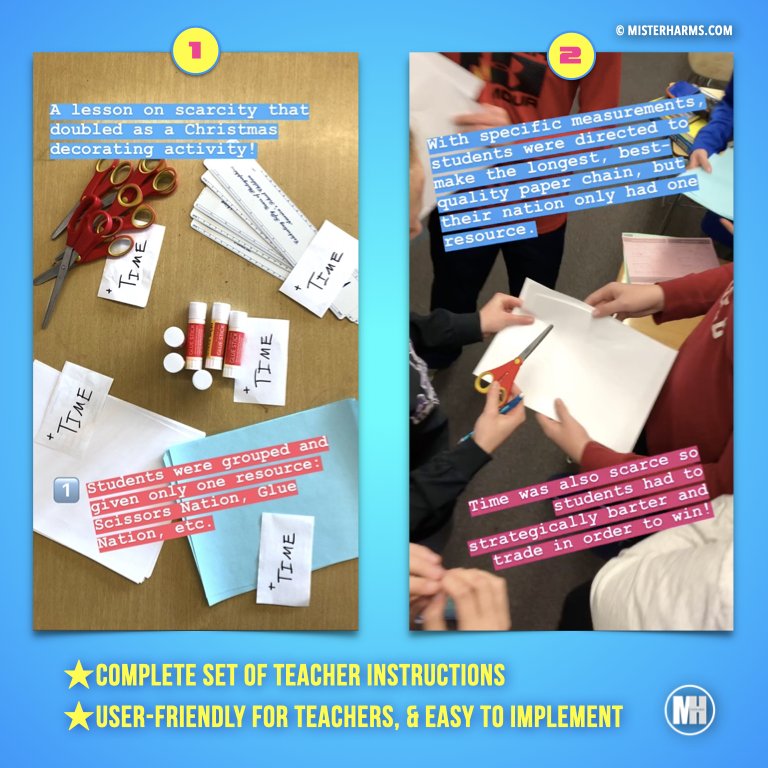
Split your students into groups and each group will become a nation that only has one limited resource. For example: white paper nation, ruler nation, scissors nation, etc. ✂️ Each nation must create standard paper-chains as described in the given amount time. Students then race to create the longest, best-quality chain! Your class will definitely enjoy this activity on scarcity as they experience having unlimited wants with limited resources! Even better, you will get some paper chains as classroom decorations for Christmas. If it's not Christmas season, switch up the colors of paper and make this a decorating activity for any upcoming holiday! All necessary details and directions are included in the download! ☞ Glue, scissors, and rulers are not included. HA!
What’s Included:
Detailed teacher directions for setup and instruction
Discussion questions for post-activity reflection
Helpful photos and examples to see how the activity works
What Teacher's Are Saying:
“This was such a fun activity! My students begged for more lessons like this…FUN, FUN, FUN ACTIVITY” - Veronica ★★★★★
“This was a perfect activity to introduce the concepts. My students were very engaged and excited to be in Econ class. They asked if we could do it again during a different holiday, they want try a different strategy.” - Kelly ★★★★★
"This was the perfect activity to use with my students. Not only are they learning about scarcity, but they are learning how to collaborate and communicate effectively in order to complete the task! THANKS!” - Elaina ★★★★★
Thank You!
Thanks so much for stopping by! It's great to meet you! I hope this resource adds value to your classroom. If you have time, I'd love for you to leave a rating on this product with your awesome feedback, and make sure to follow Mister Harms for important updates and savings. I would also love to see how you've incorporated this product into your classroom. Feel free to post a photo of this resource in action and tag @misterharms so I can meet you! I hope you have a wonderful day!
Want More?
If you want to see the "basic economic problem" in action, try the Paper Chain Scarcity Activity. This is one of my personal favorites because it’s fast-paced and visual.
Students are split into "nations," but each nation is missing a vital resource. One nation has all the red paper, another has the only pair of scissors, and another has the only glue stick.
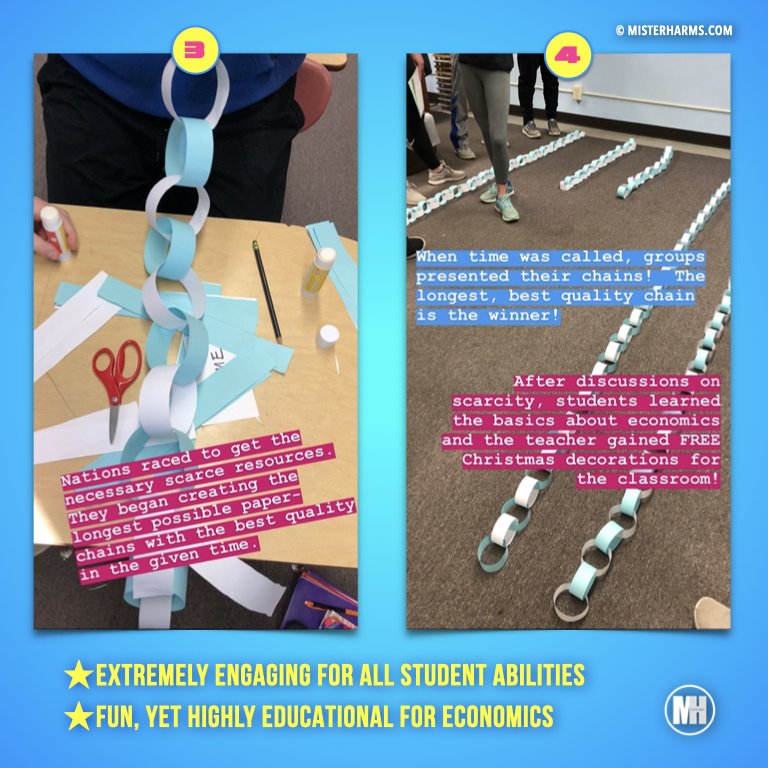
The Challenge: Build the longest, highest-quality paper chain in a set amount of time.
The Lesson: To succeed, nations must trade. They quickly realize that having "unlimited wants" (a long chain) is impossible without managing their "limited resources."
Check it out: Download my Scarcity Paper Chain Activity here to get all the templates and instructions I use in my own classroom.
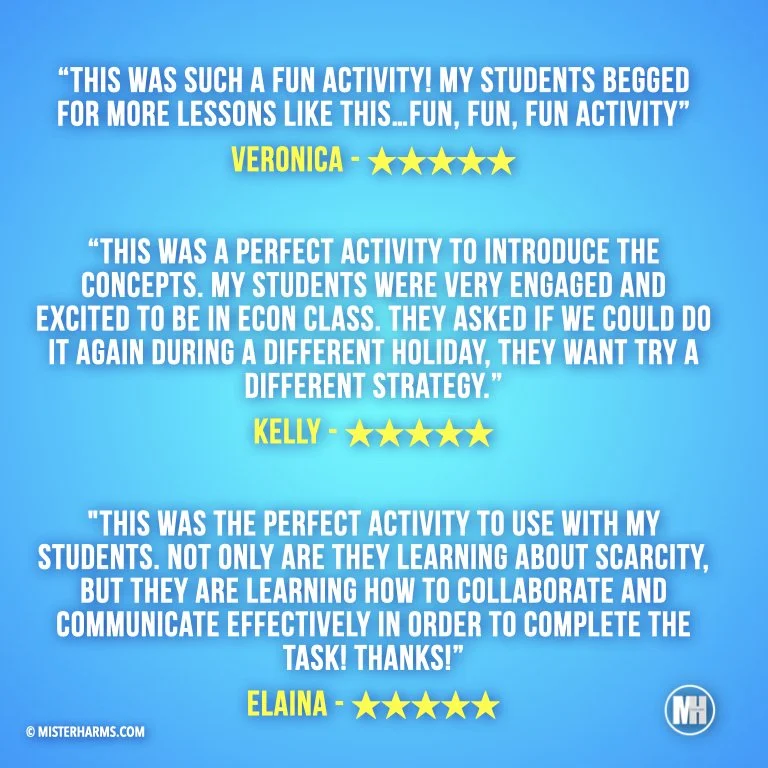
“This was a perfect activity to introduce the concepts. My students were very engaged and excited to be in Econ class. They asked if we could do it again during a different holiday, they want to try a different strategy.”
3. The Classroom Auction: Interactive Resource Allocation
Turn your room into a high-stakes marketplace! Give students a set amount of "Classroom Currency" and auction off desirable items (like a "sit in the teacher's chair" pass or a piece of candy).
This interactive simulation reinforces:
Negotiation Skills: How much are they willing to spend?
Budgeting: If they spend it all on the first item, what happens when the "scarcity" of currency hits them later?
Market Value: Why did the price of the last item skyrocket?
4. Digital Investing: A Virtual Stock Market Game
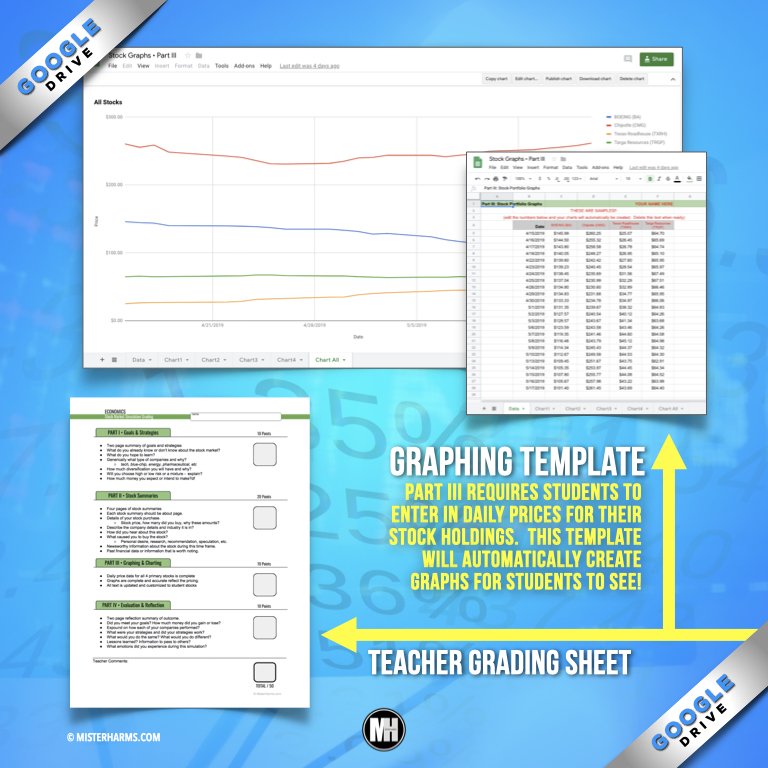
Studying the stock market can be difficult, yet life-changing if studied properly! For years I have wanted to help students grasp a comfortable understanding of the stock market. Through semesters of tweaking and formulating, I have come up with this resource that students and teachers alike can approve of! Students will enter an online game, watch their stock returns, write reflection papers, draft summaries of their investment companies, chart returns, and create a reflection of their entire experience. All necessary directions and writing templates needed are included in this download.
Using the free online-portal www.marketwatch.com, teachers can create a private, classroom game that follows and emulates the real NYSE! Students are given a set amount of dollars ($50,000 real "fake" dollars) to invest into whichever stock companies they are interested in. The private game option allows students to see each other's portfolio investments, and it also keeps track of game rankings to help students see who is winning with the most capital gains! I love joining in and trying to beat my students as well! Since the game tracks the real market, students learn so much more through this simulation, rather than just talking about it in class. Not only will they be learning practical concepts, but they will be engaged the entire time. My students are always so excited, they keep checking their stocks throughout the entire day!
⭐️ Get the Economics Bundle and save 25% on this resource and more
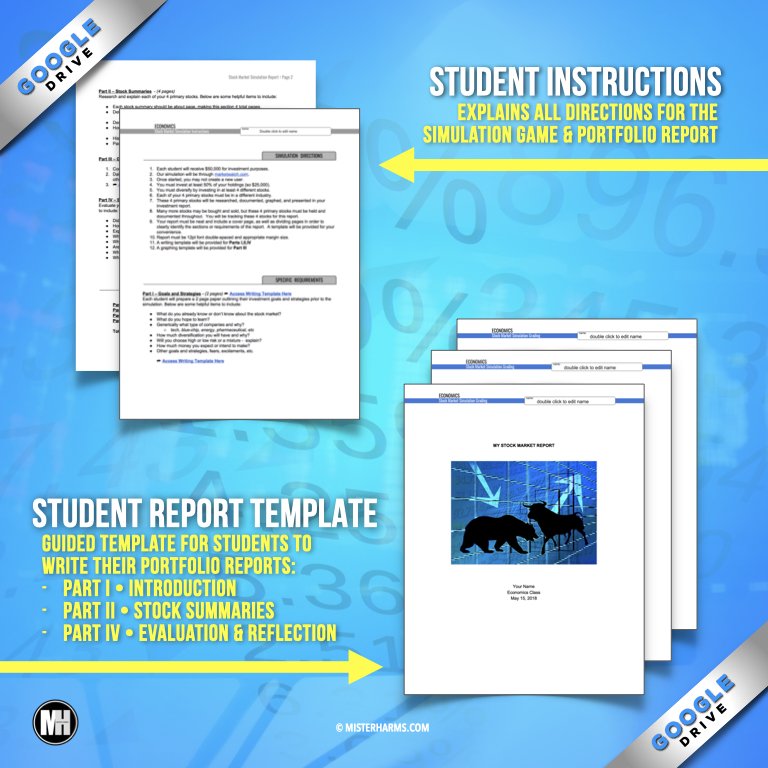
In the assignment portion of this simulation, students will be required to do the following tasks using the provided writing templates:
Part I • Introduction Summarizing Their investment Strategies
Part II • Stock Company Summaries
Part III • Graphing and Charting Of Their Chosen Stocks
Part IV • Reflection & Evaluation
All specific details and requirements will be explained in the download
What’s Included:
A detailed set of teacher instructions
Student instructions that explain the entire game simulation as well as directions for the written portion of the portfolio report
A writing template for students to download for drafting their written assignments
A graphing template for students to download for tracking and graphing their stock investments
Final grading rubric for teacher use
Everything you need for the game and written reflections are included in this download
All instructions, forms, and assignment templates are accessible via Google Drive. You can then share or print for your students' use.
⭐️ Also on Teachers Pay Teachers
What Teachers Are Saying:
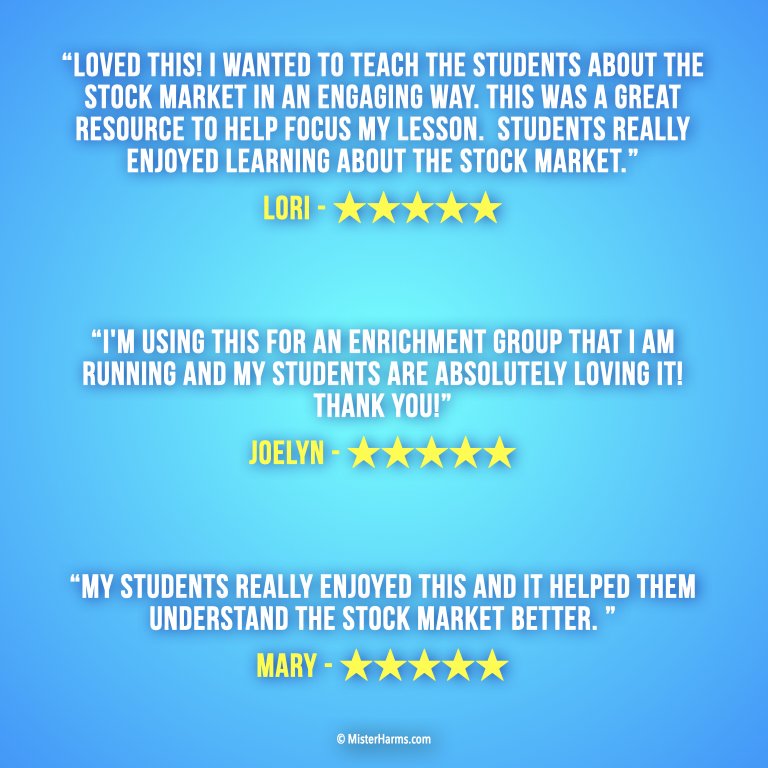
“Loved this! I wanted to teach the students about the stock market in an engaging way. This was a great resource to help focus my lesson. Students really enjoyed learning about the stock market.” - LORI - ★★★★★
“I'm using this for an enrichment group that I am running and my students are absolutely loving it! Thank you!” - JOELYN - ★★★★★
“My students really enjoyed this and it helped them understand the stock market better. ” - Mary - ★★★★★
Thank You!
Thanks so much for stopping by. It's great to meet you! I hope this resource adds value to your classroom. If you have time, I'd love for you to leave a rating on this product with your awesome feedback, and make sure to follow Mister Harms for important updates and savings. I would also love to see how you've incorporated this product into your classroom. Feel free to post a photo of this resource in action and tag @misterharms so I can meet you! I hope you have a wonderful day!
Want More?
Economics isn't just about physical goods; it’s about capital. I’ve spent years refining a Stock Market Simulation that is easy for teachers to grade and exciting for students to play.
Using real-time data from the NYSE, students "buy" and "sell" stocks. They witness firsthand how the scarcity of a company's success (or a surplus of bad news) drives stock prices up and down. It’s gamification at its best, teaching them the dynamics of resource allocation in a dynamic environment.
Resource Link: Explore the Mister Harms Stock Market Game.
5. Classroom Shark Tank: The Ultimate Economics Simulation
Spoiler alert: No students were harmed by actual sharks during this simulation. But their business ideas? Absolutely grilled—and they loved every second of it.
If you’ve ever wished your economics or social studies students could actually feel the highs and lows of the real-world economy—without the risk of bankruptcy — then you’re going to love this.
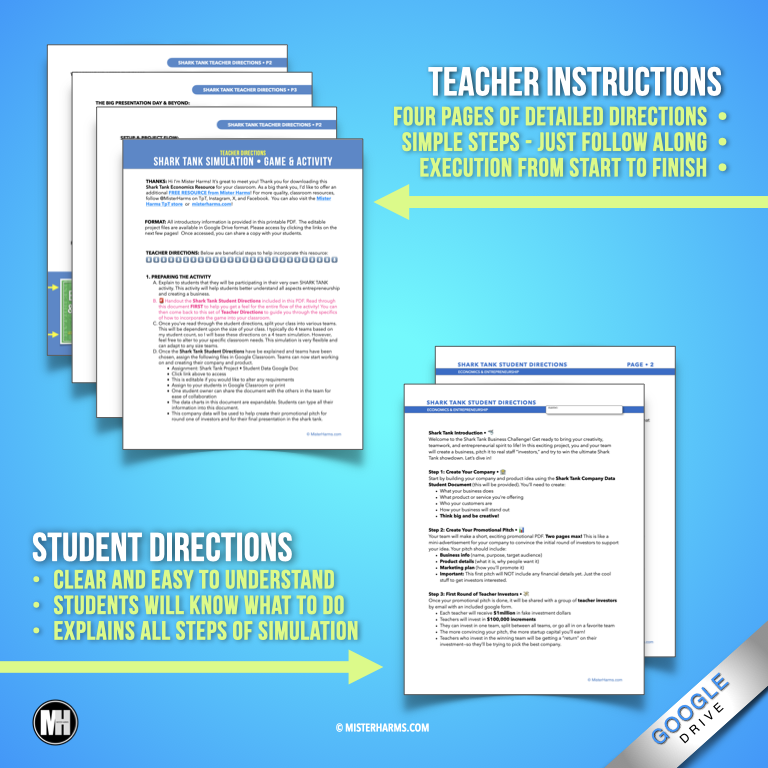
I recently ran a Shark Tank classroom simulation, and let me tell you—it was the most engaged I’ve seen my students all semester. Phones were down, hands were up, and ideas were flowing faster than caffeine during finals week. It forces them to consider scarcity from a producer's perspective, much like the real-world entrepreneurs featured on ABC’s Shark Tank: How do I use my limited startup capital to create the most value?
Let me show you how it works (and why it’s easier than it sounds). Learn how to run a shark tank simulation …



6. Daily Economics Bell Ringers: Building Habits of Mind
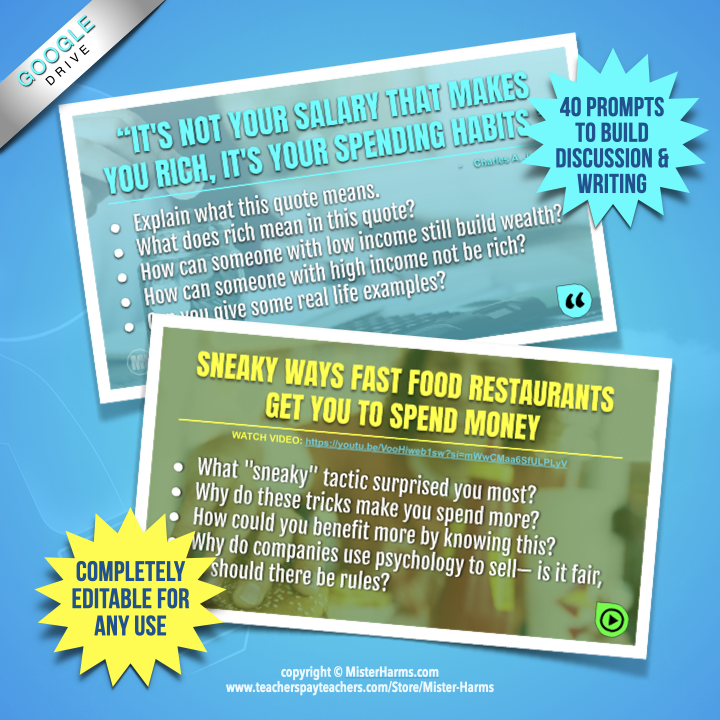
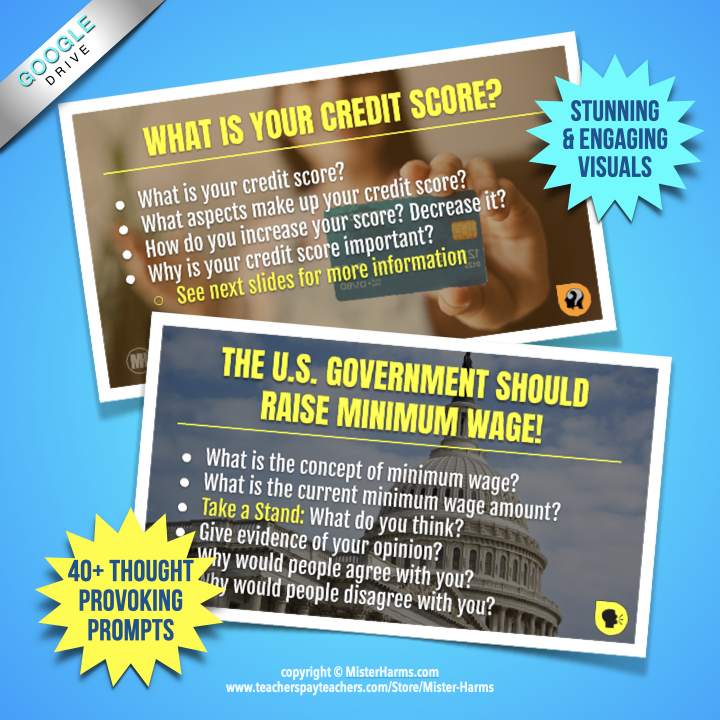
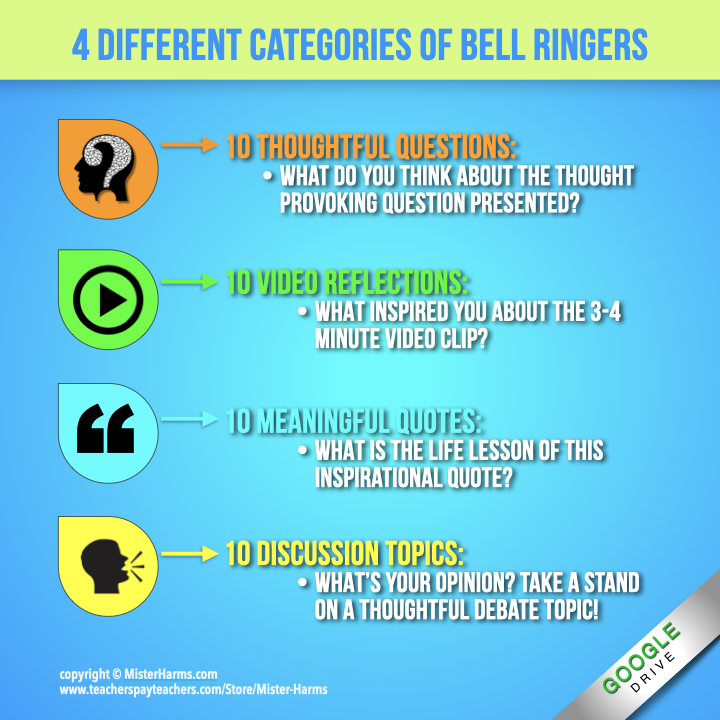
Consistency is key. You don't need a massive simulation every day to teach economic thinking. I use Daily Economics Bell Ringers to meet national standards for economic education by sparking quick, 5-minute discussions on topics like inflation and opportunity cost.
Inflation and your first paycheck.
The opportunity cost of going to college vs. entering the workforce.
How AI is changing the scarcity of certain job skills.
These small daily moments compound into stronger reasoning skills. Take a look at these no-prep daily economics bell ringers and see how you can add them to your curriculum!
Frequently Asked Questions About Teaching Scarcity
-
The best way is through a physical demonstration. Use an item everyone wants but only one person can have. This immediately illustrates the "Limited Resources vs. Unlimited Wants" conflict without needing a complex lecture.
-
Scarcity is the foundation of economics because it forces choices. If resources were infinite, we wouldn't need to study how to allocate them. Every economic theory stems from the need to manage scarcity.
-
Absolutely! While designed for a classroom, the Cupcake Conundrum and the Stock Market Game work wonderfully in a homeschool co-op or even with a smaller family group.
Final Thoughts: Shaping Informed Decision-Makers
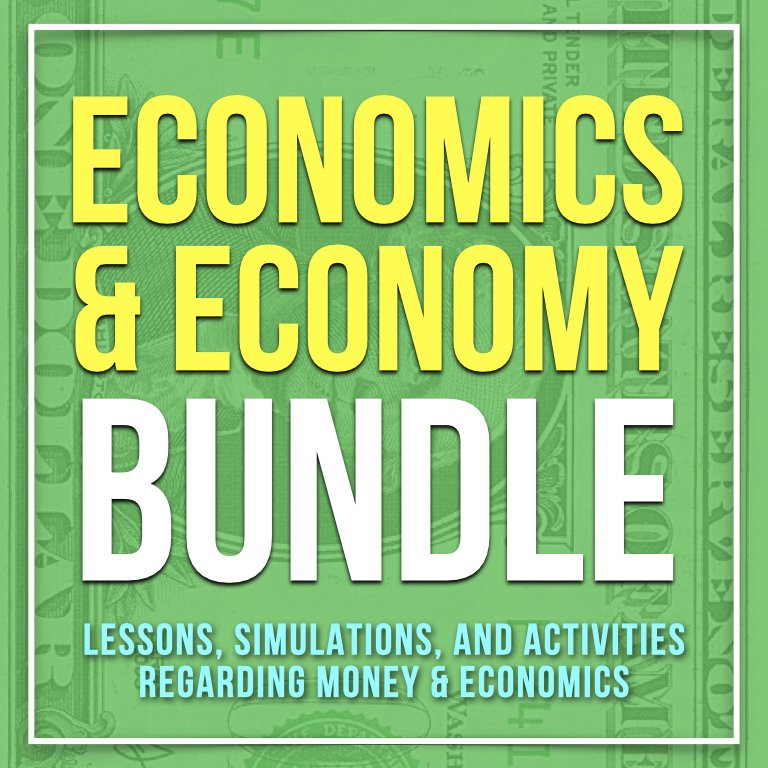
This bundle includes a variety of 12 economic resources from my store that you can add to your various economic units. With a total of 12 fantastic resources on economics, you will be saving 20% by getting this bundled version instead of purchasing the resources individually! That's like getting a few products for FREE! Products included are seen below and in the product images. Enjoy teaching economics!
What Products Are Included:
School Gear Activity: Learning about the Factors of Production
Personal Finance and Budgeting Lesson
Create Your Own Currency Activity: Concepts on What is Money
Opportunity Cost Worksheet
Merging Activity
Shark Tank Simulation: Entrepreneurship Activity
Economic Bellringers: Daily Discussion Prompts
What is Bitcoin? A history of money and more…
What Teacher's Are Saying:
“I have used a classroom economy for years in my class, but no matter how I set it up it always seems to require so much work on my part to keep it running. THIS IS SO VERY DIFFERENT!!! This system is more student-centered and student-driven than any classroom economy that I have ever seen on the market or that I have attempted to create myself. Bravo!” - DORIS - ★★★★★
“This is a fantastic hands-on, long term activity to allow students the opportunity to learn about economies…fantastic resource!” - STEVIE - ★★★★★
“Great idea. Fun way to teach basic financial principles.” - STACIE - ★★★★★
Thank You!
Thanks so much for stopping by. It's great to meet you! I hope this resource adds value to your classroom. If you have time, I'd love for you to leave a rating on this product with your awesome feedback, and make sure to follow Mister Harms for important updates and savings. I would also love to see how you've incorporated this product into your classroom. Feel free to post a photo of this resource in action and tag @misterharms so I can meet you! I hope you have a wonderful day!
Want More?
Teaching economics with a focus on scarcity goes beyond the textbook. It’s about building habits of analysis and curiosity. When students understand the profound implications of scarcity, they aren’t just passing a social studies test—they are preparing to be active, informed participants in the real world.
What about you? Have you used these simulations in your room? I’d love to hear your advice! Drop a comment below or contact me directly.
Want more free resources? Join the Mister Harms Resource Vault to get rotating freebies and classroom tips delivered to your inbox!